Corbyn and Sultana’s new left wing party could present a serious threat to labour. Has it taken the right strategy with its launch?
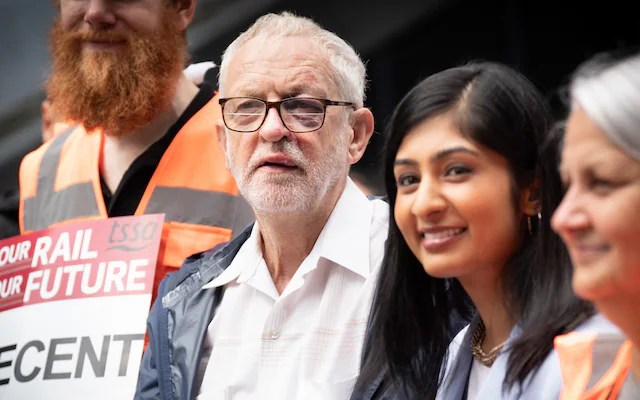
On the 24th of July, former Labour leader Jeremy Corbyn and former Labour MP Zarah Sultana launched their much-anticipated new left wing party. The political project will go by ‘Your Party’ – a placeholder name – until members decide on a new name in a conference that is expected to be held in the autumn. The launch follows a period of confusion after Sultana, who had left the Labour party over their proscription of protest group Palestine Action as a terrorist organisation, appeared to jump the gun by announcing the joint-led party ahead of time. According to The Times, Corbyn was unhappy with Sultana’s impromptu announcement on X and had urged her to delete the post. However, now that the dust has settled, the official annoucement on Thursday has been met with much enthusiasm on the left and its soaring membership numbers indicate that it could be a serious electoral force in the next general election.
This development has been a long time coming. Jeremy Corbyn, who led the Labour party to electoral defeat in 2017 and 2019 but who, critically, won more votes in both contests than Labour prime minister Kier Starmer, was suspended from the party in 2023 partly over the ongoing row over his handling of antisemitism as party leader. After being re-elected as an independent MP in his constituency of Islington North last year, Mr Corbyn formed the Independent Alliance group with four independent pro-Gaza MPs. Zarah Sultana, meanwhile, was elected as a Labour MP in 2024 but had the whip removed earlier this month after voting to scrap the two-child benefit cap. Both of these departures from Labour represent a growing dissatisfaction with the party as it moves rightwards; a dissatisfaction held by progressive voters and left wing MPs alike.
Can their new party, then, fill the gap in progressive politics? Anyone familiar with Corbyn or Sultana will be unsurprised at their organisations flagship policies: addressing wealth inequality, challenging the UK’s relationship with Israel, and taking ownership of public services. These ideas are demonstrably popular with the electorate. Although Corbyn’s measured euroscepticism and association with alleged antisemitism make him an equally unpopular figure to Kier Starmer, he is notably more popular among young people. As such, Labour’s decision to extend the vote to 16 and 17 year olds may empower Corbyn’s new party.
There are two key questions that will decide the success or failure of the UK left over the coming years. Firstly, can Corbyn and Sultana create a coherent and effective political force? Secondly, how will their new project affect the success of the Green Party, which is currently the only other left wing alternative? To the first point, many have criticised ‘Your Party’s wobbly launch. The miscommunication between Sultana and Corbyn is obviously not a good start, but their membership has nevertheless soared to 500,000 in under a week – undoubtedly a cause for optimism. A greater concern is the organisation’s balance between grassroots inclusivity and decisive strategy. In typical Corbyn style, the naming of the party as well as details about its command structure will be decided at an inaugural conference set to take place later this year. The emphasis on bottom-up, grassroots style politics is a breath of fresh air from the highly centralised two party duopoly, but it is also a risk. If Corbyn and his allies insist on listening to everyone; on incorporating as broad a church as possible, this may come at the detriment of a single, unifying voice at the top of the party. Their approach towards the party’s name, which was widely derided by the right, is one sign that the party’s impulse towards decentralisation might take away their political punch. Farage’s far right Reform party stands as a clear counterexample: their strategy of coalescing around a single, charismatic figure has proved remarkably effective. It remains to be seen whether its new left-wing equivalent will see the same success.
As to the second point, the Green Party now faces a difficult situation. Though they have always tended to be an environmental party first and a left wing party second, the absence of left wing alternatives in UK politics have seen them expand their focus to issues of taxation, ownership of public services, and foreign policy. Zack Polanski’s bid to become leader of the Green Party featured a scathing attack on Reform and its demonisation of migrants. This shift in emphasis is not at odds with their ecological roots, indeed, Polanski and others have done an admirable job of connecting environmental issues with left wing talking points such as land ownership and corporate influence over politics and media.
That said, with Corbyn and Sultana’s new project, the winds have changed. The risk, now, with Polanski’s leadership bid (which looks likely to succeed) is that there might be two rising forces with remarkably similar messages. Rupert Read, a former Green Party councillor, has argued in an article for the Byline Times that his party should “not waste its time on becoming ‘more left wing than thou’ to compete [with Corbyn and Sultana] because it will not work plus it may alienate the other voter bases who want to see a Party who is committed to environmental issues above other concerns”. Given the fact that Corbyn’s tenure as Labour leader was the only time that the Green Party did not see growth over the last 20 years, he certainly has a point. Both the Green Party and the new leftist party, whatever form it will take, have said that they are willing to work together but what shape that cooperation will take is as yet unknown. What is for certain is that they will need to form a strategy that avoids splitting the left wing vote in key constituencies. Otherwise, all the hype around this new leftist surge could be naught.
 kaspermcleish.com
Leave a comment